The name comes from a corner.
The work is for the whole city.
A generation priced out of its own city.
I'm Justin. I started Bloorgrove because a generation has been priced out of the city it grew up in, and mine is next. In Toronto, a home of your own has gone from a reasonable expectation to a distant one. That isn't a personal failing. It's what happens when a city stops building enough of the right things for decades, and the cost lands on the people who had the least say in it.
I don't think that's permanent. The core of the problem is supply: we do not build enough homes, and the ones we do build take too long and cost too much. So that's where most of the work is. More homes, built faster, without cutting the things that make a place worth living in. That means the missing middle. It means mid-rise, mixed-use buildings on transit. Over time it means exploring how we actually build, from modular and prefabricated construction to whatever else shortens the years between an empty lot and a family moving in.
Because that's the real measure. Not units on a spreadsheet, but whether a family can afford to live there and actually wants to. Ground floors that hold a neighbourhood together. Streets built for people. Density that adds up to somewhere, not just towers.
The larger aim is simple to say and hard to earn: a Toronto that is genuinely world-class, and still recognizably itself. A city the next generation can afford to stay in, and want to.
What a good park already knows.
There's a park in west Toronto, Dufferin Grove. On a good Sunday it fills up on its own: birthday parties at the picnic tables, a barbecue one over, kids on bikes between the trees, the bake oven going. Strangers and neighbours on the same patch of grass. Nobody scheduled any of it. The place just made room.
A building should do what that park does. Give people a reason to be near each other, then get out of the way. That's the whole brief. It's also the street we're building toward.
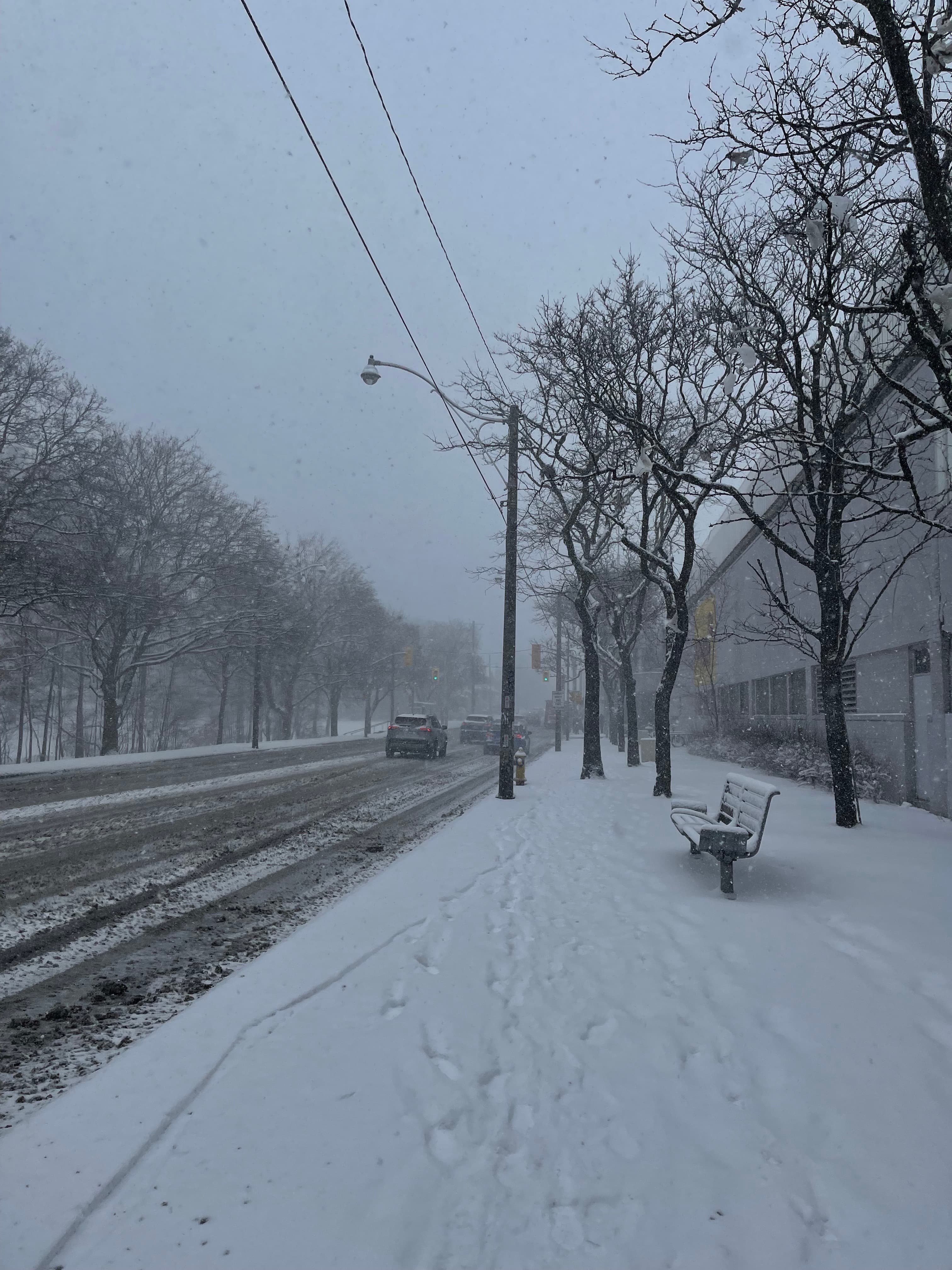
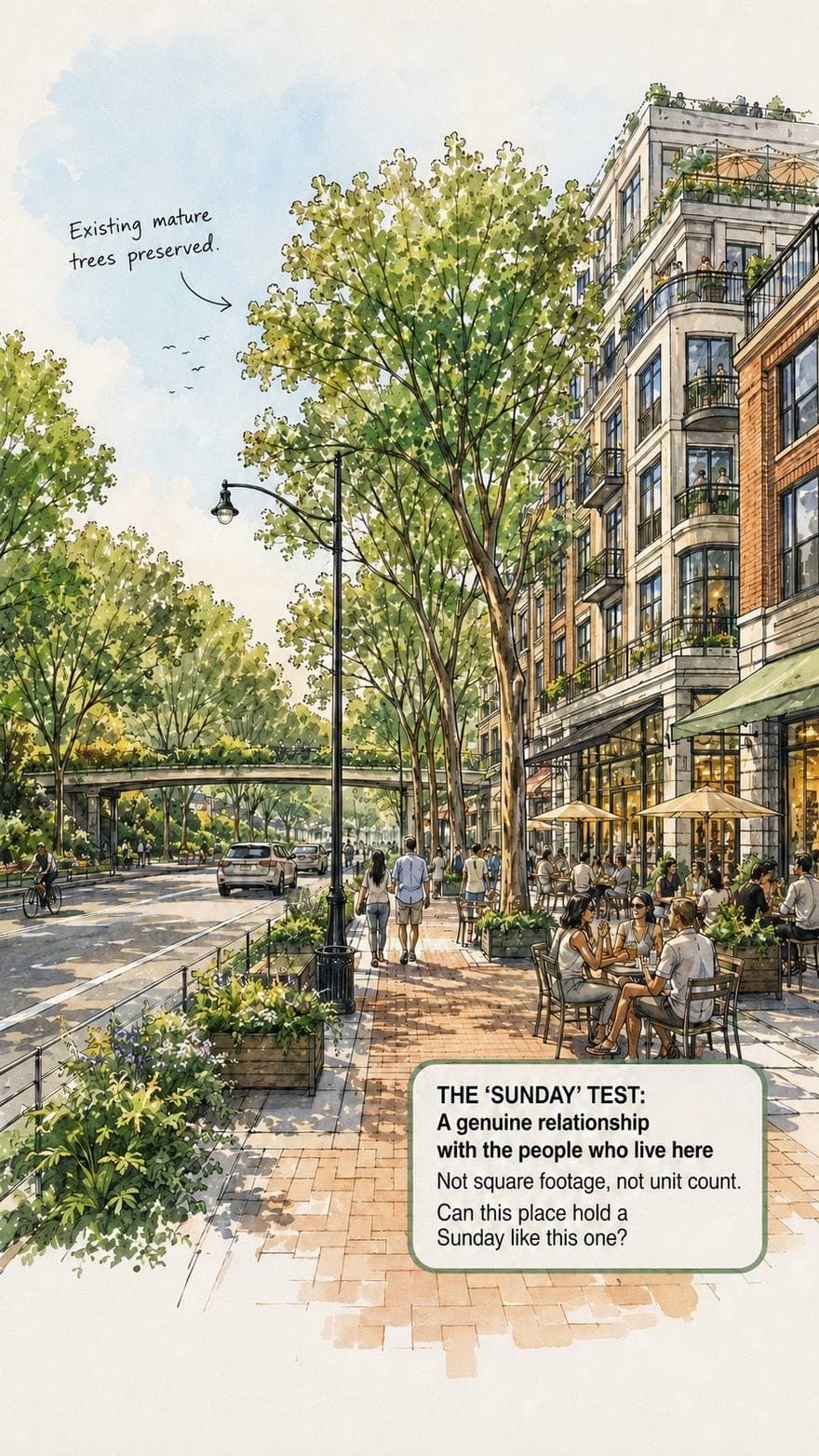
So every Bloorgrove project gets held to one question. If a place can't hold a Sunday like that, it isn't finished, and we go back and change it until it can.
The person on the line.
Grew up in west Toronto, in walking distance of the Dufferin Grove park that became the studio's test. Started Bloorgrove at 17.
Bloorgrove started as a vision growing up at Bloor and Dufferin Grove. The corner gave the studio its name. The work is for Toronto, and every neighbourhood that deserves better than what gets built.
Years of building independent online projects before this, taking ideas from concept to launch, iterating in public, and thinking long-term about design and community.
George Brown for real estate, starting fall 2026. The credential matters less than the commitment: showing up, keeping going, and refusing to give up on the long version of this.
Most developers hedge from day one, across many cities and building types at once. Bloorgrove starts the opposite way: one city, one thesis, proven properly. Mid-rise, mixed-use, transit-adjacent, in Toronto. Start focused, prove it works, then widen.
Toronto that lives up to itself. One building, one block, one plan at a time.